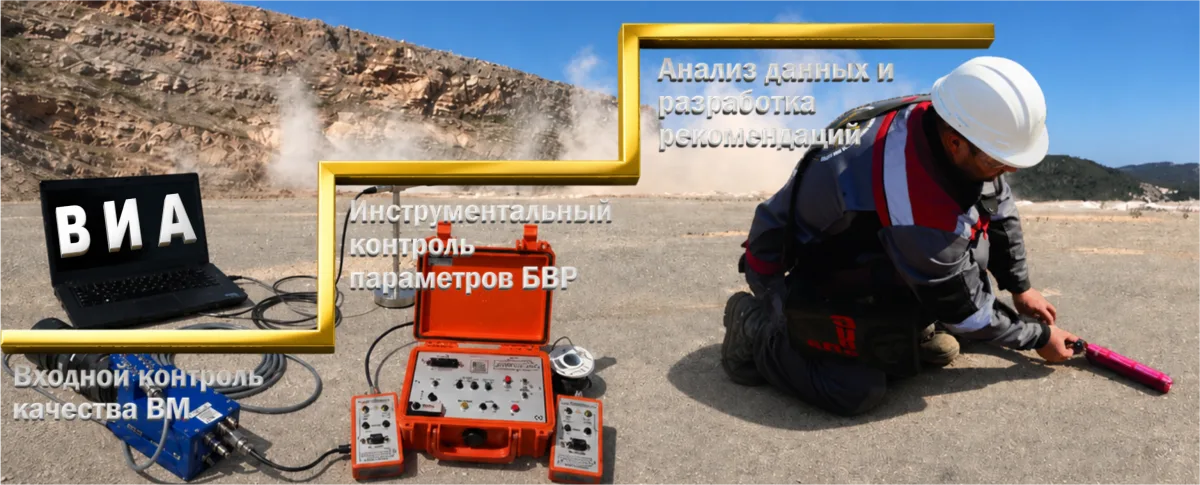
В.И.А
Three letters for efficient and safe blasting
Incoming quality control of explosives
With so many brands and modifications of industrial explosives on the market today, it is hard to judge how well they are made and what results they will give.
Mining companies are often supplied with industrial explosives that do not match the quality and safety characteristics declared by their manufacturers.
So that users of industrial explosives can be confident in what they buy, we offer incoming inspection to check that the actual characteristics of delivered explosives match those declared by the manufacturer.
For this we have our own accredited explosives testing laboratory, the necessary test equipment, qualified certified staff and extensive hands-on experience with industrial explosives.
The need for incoming inspection of explosives is set out in clause 1.1 of the industrial safety rules for hazardous production facilities and in clause 5.1 of Article 5 of technical regulation CU TR 028/2012 on the safety of explosives and products based on them.
The specific parameters checked during incoming inspection of industrial explosives can be selected from the list below:
Quality assessment parameters
- Conformity of the packaging quality to the manufacturer's requirements, GOST and CU TR 028/2012
- Conformity of the marking quality and placement on the product and its packaging to the manufacturer's requirements, GOST and CU TR 028/2012
- Conformity of the tested product's appearance to the manufacturer's requirements
- Checking that the product keeps its specified characteristics across the operating temperature range
- Completeness of detonation (reliable initiation) of the tested product
- Water resistance of the tested product
- Ability of the tested product to transmit detonation over a distance
- Dimensions of the tested product, including its particle size distribution
- Density of the tested product
- Brisance of the tested product
- Friability of the tested product
- Viscosity of the tested product
- Moisture content of the tested product
- Volume electrical resistivity of the tested product
- Electrical capacitance of the tested product
- Initiating capability of the tested product
- Response time (delay time) of the tested product
- Performance of the tested product
- Detonation velocity of the tested product
- Component composition of the tested product (qualitative and quantitative analysis).
Safety assessment parameters
- Impact sensitivity of the tested product
- Friction sensitivity of the tested product
- Critical detonation diameter of the tested product
- Critical density of the tested product
- Detonation transfer along the side surface
- Determining the safe current for initiating the tested product
- Determining the safe ignition impulse of the tested product
- Determining the long-duration ignition current for the tested product
- Measuring the volume of harmful gases in the blast products when using the tested product
- Determining the compatibility of the tested product with structural materials
- Determining the compatibility of the tested product with aggressive media (sulphide-bearing rock)
- Determining the thermochemical stability of the tested product
- Determining the sensitivity of the tested product to flame and to initiating devices
- Detecting stray currents and their effect on the tested product
- Determining the hazard class of the tested product using the UN methodology
Instrumental control of blasting parameters
Engineers at mining companies always want to know how explosives behave at the moment of the blast, how much useful work they do and what harm they may cause to people, equipment and structures.
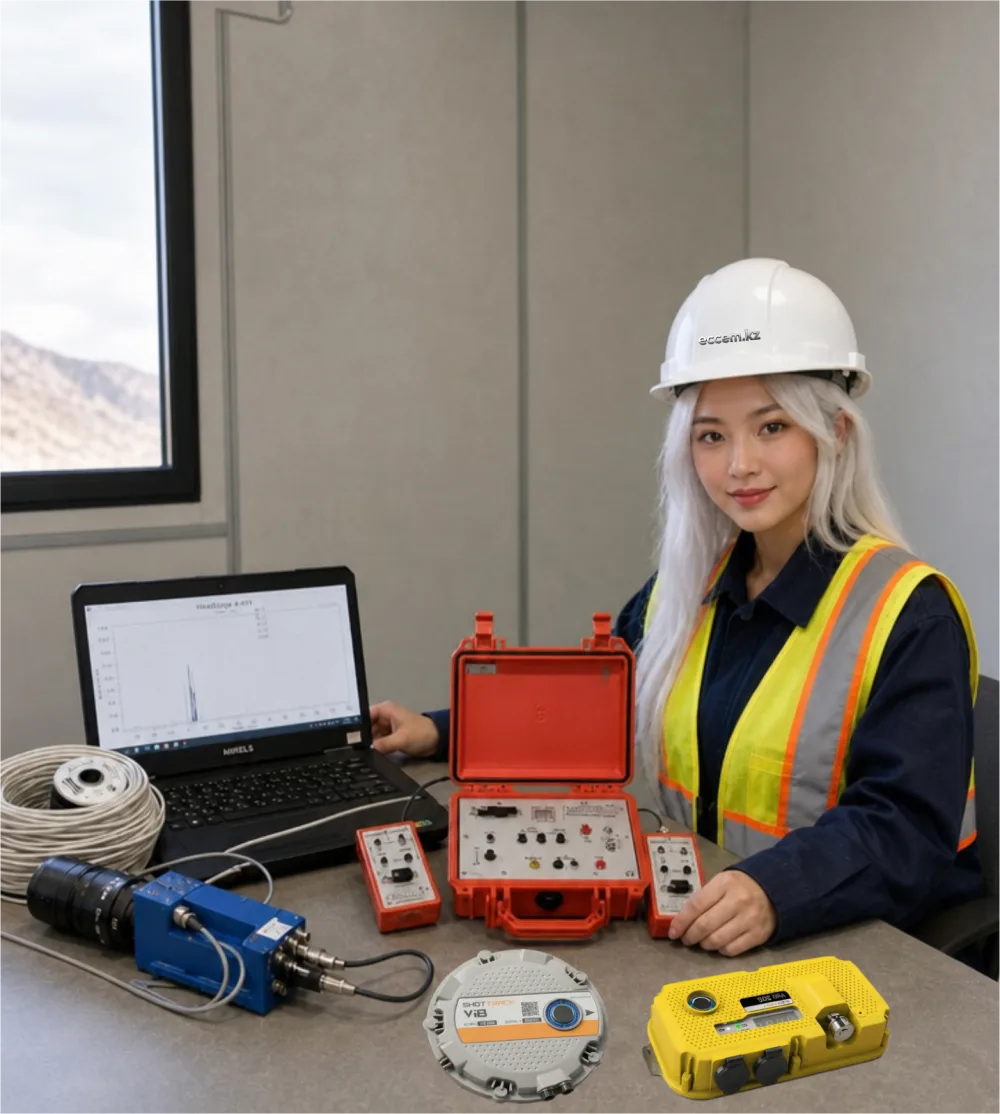
Our specialists can answer these and other questions. With high-precision measuring equipment from leading global brands, we can show you exactly how efficient and safe the blasting at your site is.
The specific parameters measured during instrumental control of blasting can be selected from the list below:
- Recording the seismic effect of a blast
- Recording the blast wave strength and assessing its effect on people, equipment and protected facilities
- Measuring the velocity and completeness of detonation of blasthole charges on site, and the accuracy of delay intervals in initiation devices
- High-speed filming of the blast and analysis of rock movement and fragment scatter
- Determining the size distribution of blasted rock and analysing fragmentation
- Determining the output of excavating machines and process systems
- Determining how aggressive the rock is, the acidity of mine water, and the compatibility of the explosives used with that environment
- Comprehensive study of the technical, economic and safety performance of different industrial explosives and blasting methods in open-pit and underground mining
Data analysis and recommendations
Even experienced site teams often cannot fully analyse the instrumental data on blasting, and valuable information that could later be used to get the most out of each blast is overlooked.
We make life easier for blasting crews at mining companies by providing a comprehensive analysis of the instrumental data on the explosives used and the blasting methods applied.
The data analysis and recommendations are prepared by our qualified specialists with relevant degrees, drawing on the instrumental data, scientific literature, calculations, regulations and their own professional experience.

Results are delivered to the client as:
- presentations
- an expert opinion
- a research report in line with GOST 7.32
- a research report in the client's format
- a technical document (regulation, instruction and so on)